Monday, February 11, 2008

Ah hah! Moment for a Monday Morning

I have to confess I'm feeling a bit guilty because I'm at work and I'm reviewing my learning blogs, but for this 50-year-old instructional designer, I could not resist posting this ah hah! moment I just had.

I was reading Jay Cross's article in Chief Learning Officer magazine about Adaptation. The gist of the article is that we are at a point in time where the workforce is split between those who came of age during a period that still was dominated by the Industrial Revolution and its vertical hierarchy and younger workers who are identifying with the information age and are more accustomed to its more horizontal hierarchy.

But my personal light bulb went off when I got to near the end of Jay's piece in which he wrote:

This is not to say that networks will replace all hierarchies, for that leads to chaos. Someone has to sign the paychecks and mediate among the stakeholders. The challenge is to achieve the right balance, applying command-and-control as appropriate for stability and networks when they improve performance.

Traditional learning is bursting at the seams because there is always more to learn and unlearn. The amount of knowledge in the world doubles every three years. New discoveries invalidate former truths.

So shoot me for being dense, but it never occurred to me to think of learning as something other than linear. You pass through your toddler years learning from your parents, siblings, and other toddlers; you enter elementary school, proceed through middle school, high school, college, etc.

I always saw this as just adding layers of knowledge, I never considered that New discoveries invalidate former truths, meaning you had to cycle back to information you formerly acquired and overwrite it with new information, or perhaps retain the old information, but store it elsewhere as invalid or obsolete knowledge that can be used as a red flag to correct others who still labor under the misleading or obsolete information.

Okay, back to work.

Sunday, February 03, 2008

Let me tell you about...Excuse me, what were you saying?

Killian & Company have a fascinating opinion piece about the public's attention span and what it means to marketers which I think can also hold true for training and development individual. The article, The Post-Literate Era: Planning Around Short Attention Spans, when viewed in the perspective of learning initiatives would seem to argue against the lengthy (read 60 minutes or more) elearning initiative.

Brand holders need to be aware of the implications of this phenomenon, including such practical applications as starting a White Paper with a paragraph that consists of one short simple declarative sentence. Welcome to the Post-Literate Era – a period which began decades ago but which has gained momentum in the 21st century. The evidence is everywhere: we can even draw the graph of sustained attention, from a 19th-century reader willing to read David Copperfield over several weeks, to long-copy magazine ads of our grandparents' generation, to today's web pages that are given 4.5 seconds to show themselves relevant.

As an avid reader my initial response is to rail against this apparent turn of events, but, being a reader, I continued on from the initial proposition and found some guidance, guidance that had been fermenting in my brain already.

In today's age learning content can no longer be just facts on a page. They must be engaging which requires strong storytelling. Now this is nothing new and I've heard it said before the advent of shorter attention spans that successful learning events need to engage the learner, but I think this concept has often been given lip service while the focus of most learning is on how to save dollars by using software that will allow rapid development of e-learning courseware by the subject matter experts who know their materials. Unfortunately the subject matter expert may not be the best story teller.

Nobility, elected officials, and celebrities know that while they may be good at what they do, they may not be the best at telling their own stories. So they hire writers to tell their stories for them. Likewise the training industry sprang up to tell the stories of subject matter experts. I think as an industry we need to reflect on how we tell these stories and remodel them to reflect how society wants to absorb these stories.

Hour-long clicking of Next buttons to read course content and maybe see an animation or two will no longer work. We have to streamline presentations to be absorbed in smaller chunks and can be developed and delivered in multiple means: on-line courseware chunked into small (10 screens and no more) sections that can stand on their own; audio podcasts using narration developed for the courseware; transcripts of the podcasts for reading; online forums in which people can discuss the matter with one another.

It's a new age and we need to start thinking in terms of how our customers want to consume our product rather than force customers to try and swallow what we produce.

Friday, February 01, 2008

Fiber Optic Cable Cuts Isolate Millions From Internet, Future Cuts Likely | Threat Level from Wired.com

So there was a major Internet outage yesterday. We often worry about  electrical outage, but as we rapidly take to using our wireless devices as web access vehicles you have to wonder if we need to start worrying about network outages when we think about expanded use of e-learning and m-learning.

Given the desire by telecoms and broadband customers to keep costs low, situations like the current cuts will continue to happen, according to Todd Underwood, a Vice President at Renesys, which provides internet information analysis to the majority of the world's largest telecoms.

"Part of the lesson here is that there will always be outages," Underwood said. "This is all about money -- how much money do we want to pay to make sure the network doesn't go down? We are used to thinking of the internet as being a thing that goes down."

We take a great deal of our technology for granted until we lose it. Maybe we need to start thinking about redundancies in the training world as well.

Fiber Optic Cable Cuts Isolate Millions From Internet, Future Cuts Likely | Threat Level from Wired.com

-------------

Further thoughts: Is this occurring at the same time that the economy is tightening up and corporations will be looking towards cyber alternatives to traditional classroom training? Could we be seeing a perfect storm for the training world brewing?

Thursday, January 31, 2008

Skunk works, ahhh, the smell of success

Jay Cross posted an interesting and quck video interview he did with Nigel Paine about what learning and development folks can look forward to in the near future as the economy seems to be stumbling. The interview occurred at the beginning of Learning Technologies 2008 in London, England.

I like the idea of running skunk work operations, in fact where I work we have been doing this right along. The big question is, after we flesh out these efforts, how do we take our skunk work products and convince the corporate IT departments to take the leap? That is an informal learning effort that has to be undertaken along with the formal proposal process.

As these tools  (wikis, blogs, social noteworks) become more familiar to the decision makers it should become easier to integrate them into the corporate workplace.

Wednesday, January 30, 2008

Reasons for podcasting

I was recently cleaning out my inbox when I came across the Jan. 16, 2008 edition of Campus Technology's Smart Classroom newsletter and the lead item was an interview with Rice University's Jeffrey Daniel Frey about podcasting and education. Mr. Frey offers some sound advice for individuals who are looking to get into the podcasting.

Two of his observations jumped out at me.

Campus Technology: Let's start by talking generally about podcasting in education. You've done a lot with podcasting, and you write and speak and consult on the topic. What do you see happening out there?

Jeffrey Daniel Frey: One of main thrusts is people who say that they need to podcast, but why? Doing something for the sake of technology doesn't work. The first thing I look at is the "why?" I ask people, what's the benefit? What are the metrics out there? What are you trying to say?

This is definitely an important question to be asked, not only for podcasting, but also for the use of any communications tool. Too often people want to jump onto the latest fad especially in the learning world.

His other comment is also something that gets lost in the rush towards the latest trend in content delivery.

CT: So it goes back to one of the basic rules about Web sites: it's really about content, not the medium.

JDF: Yes, know your audience, and start with the content. That's what we tell people when we're building a web site for them. Once we know that, we can figure out what the architecture should be around the content, then we can figure out what the delivery method for that content is.

Food for thought during this lunch hour posting.

Tuesday, January 29, 2008

Some would have us think we are all mentally ill...

It has been observed recently that the list of mental illnesses cataloged by the American Psychiatric Association has been increasing in step with the number of new pharmaceuticals that have been coming on the market.  But now here comes the claim that we are becoming addicted to technology.

Reuter's New Service posted a report Wednesday, Jan. 23,  quoting John O'Neill, the director of addictions services at the Menninger Clinic in Houston, that the public's use of cell phones and email is approaching "addiction-like behavior."

"We can become overloaded by technology and suffer consequences in our relationships," [O'Neill] added.

O'Neill's observations are backed up by psychologists who have classified technology addiction as an impulse disorder that can be as socially damaging as alcoholism, gambling and drug addiction.

The Internet/Computer Addiction Services in Redmond, Washington, which runs treatment programs and provides therapy, estimate that 6 to 10 percent of the approximately 189 million Internet users in the United States have a dependency on technology.

O'Neill said it's all about teaching people how to manage their behavior in a healthy way.

O'Neill claims that warning signs of  "an unhealthy relationship with technology" are:

  • using text messages, email and voice mail (presumably the writer meant telephone) rather than face-to-face interaction
  • limiting time with friends and family to tend to email, return telephone calls or surf the internet
  • An inability to leave home without a cellphone

Anyone who reads my blog (and I thank all two of you, especially you mom!) knows that I have a love/hate relationship with technology in learning, but even I see a high-priced cure looking for a problem.

First off I think O'Neill is demonstrating his lack of understanding of technology by using the  term to define only electronic communications devices. Technology is broadly defined as the usage and knowledge of tools and crafts [by a speceies] to control and adapt to its environment.   Our automobiles that we use to get around are technology, as are the appliances in our kitchen that we use to store and prepare our meals, and the televisions, radios and books we read to keep us entertained when we are not driving or eating, or using communication devices.

We depend on all of this technology to survive. According to O'Neill we must all be heavily overloaded causing a ripple effect through our relationships. I think Glenn "Instapundit" Reynolds gets it right when he says: I think that yammering on about addictions is the habit that some people need to kick...

Thursday, January 24, 2008

Eye-openers from eLearning Guild's Authoring & Development Tools Webinar

I'm sitting in listening to the e-Learning Guild's 360 report on authoring and development tools and I was surprised at the top three tools their survey uncovered. The order is:
  1. Adobe Captivate - 66%
  2. Microsoft PowerPoint - 58%
  3. Microsoft Word - 47%
I guess I am either niave or blinded by the fact that people use some very basic tools for elearning development.

More surprising was the typical way teams train on authoring tools.
  • 81 % reported teaching themsleves
  • 70% learn from peers
  • 34% learn from formal external training

Wednesday, January 09, 2008

December 2007 Issue :: Global Learning Resources

Jay Cross has a fascinating take on corporate learning that is closely in tuned with where my thoughts have been going regarding the corporate learning world. Of course, Jay, being the master and I the poor grasshopper (apologies to Kung Fu fans everywhere), has distilled the essence of my thoughts much better than I could hope in an article titled Don't Call them Trainees in an article posted in the Dec. 2007 issue of Human Capital & Corporate Universities Newsletter. Money quote:

Instead of training, tell the worker what she needs to know how to accomplish the job. Offer a variety of ways to get up to speed, from treasure hunts to finding information on the company intranet. This makes the learner take responsibility. There's no longer an excuse for not learning.

He then proceeds to tell the story of Hans Monderman, a Dutch traffic engineer who argues that the a big problem with motorists and the way they drive are the number of street signs telling them what to do. Monderman has discovered that if you remove street signs, especially speed limit signs, drivers take more responsibility for their actions. In communities in The Netherlands where Monderman practices his craft, traffic accidents are down 30% and the average motorist's speed has dropped to 50% of what it had been originally.

Monderman says that if you treat people like fools, they act like fools. Take off the training wheels; they drive like grownups.

Being told to take a training course is like driving on a road with signs, stripes, and bumps. If a worker takes a training course but doesn't learn, what's her reaction? "The training wasn't any good."

Given the way people drive here in the northeast, I'm a bit hesitant to do away with street signs right away, but I do think we are overly paternal/maternal in the way we approach providing the knowledge adults need to know to do their jobs.

December 2007 Issue :: Global Learning Resources

Monday, December 31, 2007

Copyright Wars

Canada seems to be fighting back against the government-sponsored, corporate-driven copyright digital copyright rules that already exist in the United States. This short video explains the issue to Canadians in a brilliant 5-minute mash-up of Charles Dickens' A Christmas Carol and a compilation of science fiction movie and television standards by Galacticast.


As the recording industry sinks deeper and deeper into the DMCA quaqmire by now claiming that U.S. citizens cannot rip CD content onto your computer from legally purchased CDs, it seems clear that the downside of being an information economy is the push to lay legal claim to all sorts of information for the purpose of exacting a price for the use of that information. From a learning perspective this scares me to the bones.

Despite the best claims of businesses that their subject matter experts have all of the data necessary to develop the training they are buying, as an instructional designer who is often required to fast-track training development in the name of rapid instructional design, I and others like me often turn to the Internet to fill in gaps because the SME is not available and time constraints require us to produce content.

As information becomes more proprietary we run into another time hurdle in which we have to survey the site to determine if the information posted there is available for public consumption or is proprietary.

Sunday, December 23, 2007

Electronic flash cards - wave of the future?

So I had a coworker send me a link to the video about the use of mobile phones for learning about a week ago. The first time I watched this something about it did not sit right with me. Take a look and see what you think.

I just re-watched it and it became more apparent what disturbed me. While the UCF Report attempts to position the use of testing via cellphones as something new and exciting it appears to me to be the same old "drill and kill" approach that traditionalists have been demanding a return to for years now; it's just dressed up in new clothing. Replace the cellphone with flash cards and you have the same approach to learning.

I guess the argument could be made that the cellphone approach makes it more appealing to the children and it engages them outside the classroom, but it bothers me that the cellphone delivery is also used during the class. Where is the teacher in all this? Primary engagement in the classroom should be between the teacher and his or her students? If the students are staring at their cellphone screen how does the teacher know they are engaged in learning and not IM'ing a friend?

While I think mobile learning via cellphones, PDAs, and other mobile devices have great possibilities, I'm a little leery about the approach put forward in this video. I think it is directing mobile learning initiatives down the same old path that education has traveled already. And if we have learned anything from the push towards learning on computers, once we start down that path it is extremely difficult to reverse course.

Another thing that bothers me about the UCF approach is the extension of the corporate concept that employees should be available 24-7 thanks to computers, cellphones, and blackberries to children and formal education. Parents already complain about their children being overburdened with homework and now they are going to receive more homework by way of cellphones? And their responses must be in by 6 p.m., not the next school day. This is a bit disconcerting.

Don't get me wrong I believe strongly that learning never stops, especially not once you walk out through the doors of the schoolhouse. But learning outside the schoolhouse is informal learning. It should not be about answering a cellphone and responding within a time frame dictated by a teacher.

Saturday, December 01, 2007

Could this be the future of mobile learning?


After spending the past two days attending the eLearning Guild's mobile learning forums and listening to people wonder about the future of smart phone usage I came across this gadget this morning.

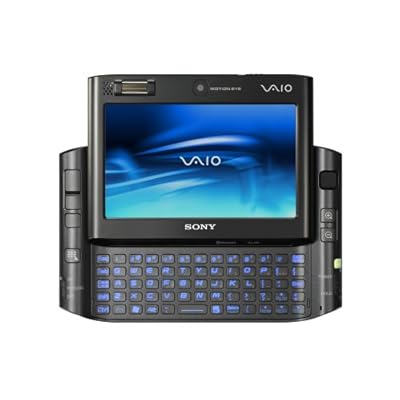
This is the Sony VAIO VGN-UX490N/C 4.5" Notebook PC. It is a personal computer packaged with Microsoft Vista Business edition, 1GB of RAM and a 48GB of Flash hard drive space. It offers both wifi and ethernet connectivity as well as bluetooth connectivity. It's price tag is only $2,400. This would be a great little package for mobile learning.

Friday, November 30, 2007

Future of mobile learning

The closing session of the eLearning Guild's Strategies and Techniques for Implementing Mobile Learning session was presented by Brent Schlenker, a research and emerging technologies evangelist for the eLearning Guild. His topic was the Trends and the Future of m-Learning. Rather than focusing on individual elements of mobile learning Brent looked at the bigger picture and had the participants thinking about the implications of information transfer to mobile devices.

Hinging his talk on the appreciation that technology does not stand still, Brent noted that "yesterday" technology (i.e. the internet) was about consuming – the read-only internet. Today we can interact with our cellphones by sending messages, sending images and video, etc. In the future a server will send information that it thinks we need.

This last concept is one that was touched upon in one of yesterday's sessions, a new "push" learning concept. I suppose the one area that scared me came from the chat pod where people were suggesting a workaround to the small screen in most mobile devices would be projection technology. The question is will businesses want their people to project their information in public? Does that then defeat the purpose of mobile technology? do we want to risk projecting the wrong kind of information in public? Do we want to be inflicted with other peoples videos? Its bad enough that we have to listen to their cellphone conversations.

Selling the Value of Mobile Learning

The second session of today's e-Learning Guild's Strategies and Techniques for Implementing Mobile Learning today was titled Selling the Value of Mobile Learning presented by Joshua Byrne of Adayana. The main message that Joshua delivered was twofold: 1) make sure that the learning opportunity you are proposing to address with mobile learning is an appropriate venue for mobile learning, and 2) It's easier to implement if you are only creating for a consistent (which I take to mean a single) platform.

He talked more about the shortcomings of m-learning, such as:
  • the difficulty of deploying to multiple platforms because of their inconsistency in how they render the end product
  • need to keep visual elements to a minimum and time to interact with the learning short because of the difficulty of staring at the small smart phone screen for a long time.
The key to selling m-learning is to identify the "killer app" that will make learners migrate to using mobile learning. He defined killer app as that element of a technology that people will adopt because of its convenience. Examples he offered included spreadsheets within the desktop computer environment and the ability to make phone calls anywhere drove people to quickly adopting cell phones.

And when you recognize that killer app you have to be sure it solves an important problem; and then you explain the solution using an anecdote that will make it understood. He also recommended having a proof of concept so that the person you selling the idea to can actually try it. Not only does this demonstrate the usability of the m-learning tool, but it allows the customer to see the hardware that would deliver the learning in action.

Day 2 of eLearning Guild's m-learning forum

I started the second day of the eLearning Guild's Strategies and Techniques for Implementing Mobile Learning forum by sitting in on the Anita Rosen's of ReadyGo, Inc., session on "Effective Mobiel Learning User Interface Design" and it was an intriguing cold shower in the warm glow of mobile learning juggernaut. Anita put it in perspective by noting that m-learning is the "bleeding edge" of learning. She noted that her success story revolved around her customer "Telefónica" which is a telephone provider and so they had the technology in place.

She cautioned that you really have to be sure of what you want to do and what your goals are because there are a number of limitations that must be overcome especially if you want to send your learning engagement out to a range of smart phones. Limitations include:
  • Different operating systems support different levels of html and streaming animation
  • Consider the environment that the learner will be taking the course it will be probably in a public area where there are distractions. Will the learner be able to stay focused
What she said works best is limited graphics and the graphics you do use should not have any embedded text because it will not be possible to read it. She cautioned against embedding too much audio or animations because of download speeds which she argued was around 19kbps. I found that a bit dubious and googled smartphone data transfer speeds and discovered that newer smartphone networks now boast of data transfer speeds equal to low-cost DSL connections.

Thursday, November 29, 2007

Session 3: Learning at large: Mobile e-Learning Design

The final session for the day: Learning at Large: Mobile e-Learning Design presented by Clark Quinn. Clark was encouraging us to think outside the traditional learning paradigm and think about m-learning as performance support.

Things that he said that struck me as important:

M-learning is all about Learner's rights
  • The right information
  • to the right person
  • at the right time
  • in the right place
  • in the right way
  • on the right device

This was not original Clark Quinn, he was quoting Wayne Hodgins. He did offer some good advice when approaching m-learning beginning with "It's not about learning" it's about performance improvement; it should be brief and delivered in incremental amounts not a brain dump.

He also offered a new view of "push vs. pull" in that push is an intelligent learning engine supplying just-in-time information pro-actively to a learner in the field. He offered the example of a sales person who would automatically receive information on his cell phone or blackberry concerning the client he or she is visiting and the services they may already be buying or may be interested in buying.

Session 2: Investigating and Proposing Mobile Learning

So for the second session Investigating and Proposing Mobile Learning was ok, I guess you always have a little let down after the first session. The presenters – Andy Petroski and Sandy Hack from Highmark – were handicapped early on by audio problems. There presentation focused on their efforts to introduce m-learning capabilities into their company.

They seemed to be approaching m-learning from a traditional training view in which you have to make the learning interactive. As I noted in my posting after the first session, my observation is that if learning content is less than 10 minutes (and granted that is an arbitrary number not based on any research that I know of) it can be a passive presentation.

That said they provided a great laundry list of areas ripe for m-learning:
  • Current company or product announcements (video, audio, or email)
  • Product and inventory updates
  • Just-in-time training or practice
  • Any location-based and contextual learning
  • Text-based (or simple animation) simulations and games
  • Social learning
  • Spaced practice
  • Coaching or mentoring
  • Case studies
  • Job aids
  • Audio or video
  • Decision Support
  • Tests and quizzes
  • Charts and graphs
They used the phrase mobile learning library as a name for the repository for their m-learning content. It's a catchy name, that could catch on, although I think most content will end up residing in a LCMS so that it is accessible by both portable devices and computers.

They did note that challenges of initiating an m-learning initiative, starting with security. How do you deliver proprietary information to mobile devices in the field? If devices are distributed to employees preloaded with content how do you ensure they are not lost or stolen? While this is a problem with laptop computers as well as mobile devices, mobile devices being smaller can be more easily forgotten.

The other key issue is usability. Not everyone has great vision and the tiny screens on some multimedia cell phones could be a problem for people to view streaming video or text content. The duo did not have all the answers, but what they offered us was rough map of the terrain that the rest of us can use to explore m-learning in our environment.

eLearning Guild's Mobile Learning Forum

We just finished the opening session of the eLearning Guild's Strategies and Techniques for Implementing Mobile Learning forum and I wanted to record my thoughts before I enter session 2. The first presenter was David Metcalf from the University of Central Florida.

Dr. Metcalf provided a broad overview of the environment that m-learning inhabits with examples of how m-learning is being applied. There was a whole lot of information delivered in 75 minutes. The big concepts I came away with are:

Content is still king. Metcalf built his whole proposal around the concept that mlearning for learning purposes is an integral part of performance support. Knowledge needs to sit separate from learning modules and performance support systems so that both can pick and choose from that knowledge base.

Long and short of it. My thoughts during elearning sessions is that long learning interactions (more than 10 minutes) need to be interactive while shorter sessions (10 minutes or less) can be more passive because you are not asking learners to sit still for a long time.

Topics to follow up on. Transcoder as a device to send content to a variety of mobile devices in fashion that the device can read; and vXML as a programming tool to deliver mLearning.

Friday, November 23, 2007

Learning Must be Set Free!

Leave it to Larry Lessig to re-awaken (if only for a moment - I'm over 50 you know) my revolutionary zeal. But I challenge any corporate training organization to watch this video and still endorse the idea that training (and learning) be delivered via a learning management system.

LMS's represent the pinnacle of push training vs. pull learning. The learner can only access the material by registering for a course and getting permission. They cannot add or revise the materials that exist in the LMS, but must go underground and spread their ideas and concepts unofficially until they are either squelched or finally come to the attention of a management suit who likes the concept and adopts it as his or her own. That management type then takes the glory for an idea that was germinated by someone further down the organizational chart.

Tuesday, November 06, 2007

Second Life/Real Life

I know the learning world is slowly going ga-ga over the possibility of migrating learning to a Second Life environment, but I have to confess that I have my doubts that the environment is ready for prime time. But it is ready for lampooning. This video I think really hits upon what most people experience when they first enter Second Life.


via videosift.com

Monday, November 05, 2007

Whither Goes eLearning?

This article by AP (PCs Losing Their Relevance in Japan) may bear watching and considering its impact on the future of learning via technology. We have already begun the discussion about how to position elearning for mobile systems, but perhaps we should accelerate the discussion.

I wonder if anyone has explored how the learning management systems that corporations use to track learner progress will play with these devices.

Sunday, October 21, 2007

Information R Us

Michael Wesch, Assistant Professor of Cultural Anthropology at the Kansas State University – the same man who provided us with the thought-provoking video "Web 2.0...The Machine is Us/ing Us" – is back with a new video about how the Web is changing how to archive and find information.


This piece has given me a lot to think about on a Sunday morning. Since I received my primary schooling before the public received access to the Internet and the World Wide Web, I recognize that I am still partially constrained by the concepts that Mr. Wesch presents in this new video.

Sure, I have made inroads into using the break-out concepts he records in this video, but I still find myself being pulled back to my roots and the need for some form of hierarchy. The need for organization, for structure, and for some form of expert to monitor and control information still exists. Not so much to tell us what to do or what to think, but to try and control the flow of information. Something like a traffic cop.

I could accept his suggestion that the hierarchy is no longer needed – that links and search engines are all that is required (or expected) – if I had some confidence that our schools are teaching our children how to search the web. There is a science (or maybe its an artform) to composing a finely-tuned search phrase. A means of getting around the commercial clutter that is returned on many search requests for information.

Maybe that needs to become the next phase in making our children computer literate. With computers common and freely available in schools and public libraries, the next big push in our schools must be teaching our children the language of the search engine so that they can find the information they need without being bombarded with useless information or commercial websites.

Saturday, October 06, 2007

Halloween is just around the corner

Okay, it's a Saturday and I haven't posted anything in a while, but this is just too creepy for words. But it is perfect for Halloween!

Tuesday, September 11, 2007

I be' Mad Davy Kidd, Arrr!!!!

Ahoy me mateys! "Talk Like a Pirate Day"be next Wednesday. And since I be a land-lubber salty-dog wannabe, I be gettin' into the spirit of things. I decided to find out what my Pirate name would be. According to this quiz I be:


Mad Davy Kidd


Every pirate is a little bit crazy. You, though, are more than just a little bit. Even though you're not always the traditional swaggering gallant, your steadiness and planning make you a fine, reliable pirate. Arr!

Get your own pirate name from piratequiz.com.
part of the fidius.org network


If ye be wondering how to talk like a pirate, ye be needin' to watch this video:

Friday, August 24, 2007

Textbooks, are they needed?

And so the debate continues to rage. Stephen Downes responds to my position on the question of whether schools should buy textbooks or laptops.

School Textbooks, Yes or No ~ Stephen's Web ~ by Stephen Downes
I don't think it's radical at all. The money we spend on textbooks is wasted. We could put the same content onto websites, we could do it for free (because it's not like our academics are paid much of anything by publishers as it is) and the kids would be more comfortable with it.
In rereading my comments I believe I need to further elaborate on my position. I really agree that buying textbooks is a waste of money. They represent second source materials that, especially with social studies books, are watered down so as to be unoffensive to anyone. Does that mean the government should buy laptops for every student, or even require that parents buy them for their school-age children? No, being the father of three children I know how children unknowingly can be irresponsible. Let's face it, you drop a book on the ground you can pick it up and it still works. You drop a laptop on the ground and the chances it will still work diminish.

Please note, though, I said "if you drop a book on the ground...". I didn't say "textbook." There is a wealth of first source books that teachers can now draw upon to use in their lesson plans. And I am not precluding the use of technology in the classroom and at home, but don't go pouring money into buying laptops for students.

UPDATE:
Wow! I'm getting it from both sides, and once again I think its because I didn't express myself well. So here goes again.

To Manish's point, I am not against reading. In fact I argued that perhaps instead of textbooks teachers should use first-source books that were written by individuals who are tackling a particular topic and not trying to cover the spectrum of a curriculum. Now there are instances where, I think, textbooks are the way to go, specifically mathematics.

To Stephen's point, no technology is full-proof and while the OLPC computer is relatively inexpensive I can foresee a world of trouble when parents decide that it is not "good enough" for their child and have to buy something better. Thus, just like the sneakers wars, you see kids and their parents get into an ever escalating computer wars requiring kids to have the best laptop possible. Unfortunately, I tend to view government bureaucracies with disdain (having worked in one for three years) and I can envision school districts deciding that the OLPC computer is not enough and the budget for their purchases balloon ever upward. There is already a simmering taxpayer revolt against the money spent by school districts, I fear this would add to that revolt.

Now, I will say that flash memory drives maybe a useful alternative. I've written previously about their value as an alternative to participant guides in the corporate learning world. I could envision buying these and loading them with wiki software preloaded with links to images, video, audio, and yes, reading material that the child could use in school on classroom computers, study hall computers, and home computers.

By God, I love a lively debate!

Powered by ScribeFire.

Thursday, August 23, 2007

School textbooks, yes or no

There is a tremor within the blogosphere over the issue of school textbooks or to be more precise whether schools should continue to purchase them or re-channel the money to purchase "laptops and digital curriculum materials for students and teachers." Wesley Freyer appears to have fired the first shot with his post A call for a textbook purchasing moratorium. I'm looking at this from several different angles and I'm at a loss on where I stand on this.

As an instructional designer who creates training for corporations and government entities I see the textbooks we create--politely called "participant guides"--as close to useless. The standard approach is to take the PowerPoint slides used by the facilitator and output it with lines underneath for notetaking. I've always considered these as a waste of paper. I have advocated in the past that if we are going to go this route, then we should create them electronically and place them on an inexpensive jump drive. At least we are not overtly damaging the environment.

As a parent of three school-age children I would not want to think about the number of laptops the schools would have had to buy my children over the years. Being a proponent of technology, albeit a frugal one, I have obtained four previously-owned laptops for my children to use and only one is still working. Children are tough on laptops, just as they are tough on everything they own. A book can survive being dropped off the side of a bed a whole lot better than a computer.

Of course what makes a revolutionary, a revolutionary is his or her unbending resolution to the cause. So we have Stephen Downes disagreeing with Vicki Davis who argues that "I personally have to underline, write, rewrite, take notes in the margin and work with the text."

Stephen responds:
Now I use a computer to do this - and it's an important skill to have. Yes, some people still do it the old way. They shouldn't. And some people today just cut and paste from electronic texts. They shouldn't do that either - they are robbing themselves of their own learning if they do that.
That's a bit too radical for me. But I understand his viewpoint there needs to be a concerted effort to break old habits and I think Vicki is making that effort. I tend to agree with George Sieman who states:
I'm not convinced that technology is deterministic - i.e. that we must inexorably trudge the path down which it leads. The real call is one of systemic change - what needs to change to better prepare our students for tomorrow's world? Technology will no doubt play a part, but I'm not convinced that it must correspondingly be the tool through which the change is enacted.
Frankly, I would like to see schools stop spending money on textbooks simply because they are bland beyond compare, watered down so as not to offend anyone. Often control over what to purchase is not in the hands of the teacher, where it should lie, and instead is controlled by state boards of education who are often pressured by special interest groups.

Often the textbooks are so bad, teachers are forced to improvise and at times they improvise well. You go "electronic" as Wesley proposes will not resolve the problem. Textbooks will just migrate to e-books, the costs will probably remain the same, but the textbook publishers will just pocket the savings from not having to buy ink or paper.

The answer is not easy, but at the risk of sounding like someone who has been left on the wrong side of the digital divide, I think pencils, pens, paper, and books need to remain a piece of the overall educational puzzle. Let's not forget, these items were the first technologies introduced into the learning environment.


Powered by ScribeFire.

Sunday, August 19, 2007

Cosmos revisited

I forgot just how great the Carl Sagan documentary Cosmos was until I watched this 8 minute clip about evolution that I found at the blog Neatorama.

I haven't seen it since its first airing back in 1980, but ithis short clip makes me want to watch the whole thing again.

Friday, August 17, 2007

On Forgetting What We Learned

Quick blog item in response to a posting by Jay Cross. Jay was in Seattle last week for the 7th annual Gnomedex, a conference of "the world's leading bloggers, podcasters, and tech-savvy enthusiasts. On commenting about staying over for the unconference, Jay had this to say:

Internet Time Blog :: Forgetful in Seattle
tomorrow, raines cohen and kaliya hamlin are convening an unconference to process the official event. i just rearranged my flights so i can attend. instant replay may become de rigueur if people understand the mechanics of the forgetting curve. if you don’t reinforce what you learn, more than half of it will be gone a day or two later.


(Image from Jay Cross's Internet Time Blog)
This leaves me to wonder about learning retention rates in elearning courses. Let's face it, most entities that are investing in elearning are doing it on the cheap. By going the elearning route it saves them from having to a) send learners away to a classroom; b) feed them at the class; c) pay for trainers to appear; d) take SMEs away from their main productive job to deliver training, etc., etc.


Unfortunately, when they do go the elearning route, they often want to do that on the cheap, creating simple page-turners, possibly with narration and images, and a set of 10 or 20 multiple-choice questions at the end to validate that learning occurred.

Don't get me wrong I'm alright with that, it helps pay my bills, but it got me wondering how it would be possible to re-enforce learning from elearning courses. I figure there is a couple ways.
  1. The first way might be to require the learner to retake the full course the next day to re-enforce what has been learned. This would be the simplest course, although it kind of smacks of brainwashing rather than facilitating learning.
  2. Require the learner to retake the post-test to see how much of the previous day's learning stuck and then send the learner back to review the content that has been lost overnight, and only that content. This is technologically feasible, but I'm not sure all LMS's are up to the task.
  3. The unconference approach seems to be the best bet, although I'm not convinced that higher-ups would buy into this.
The concept of elearning has been sold as an anytime, anywhere learning experience, which means every learner is entering and exiting the "classroom" at different times never even knowing if anyone else is in the classroom at the same time. But suppose you add a concept of an annual unconference on the topic is scheduled (either virtually or real-time) for everyone who has attended a specific elearning session. Let them discuss existing gaps and misunderstandings in their knowledge base amongst one another and generally support one another in filling those gaps and resolving those misunderstandings. Rather than sitting and listening to a facilitator they are building their own knowledge bases with the assistance of SMEs who only sit and listen, speaking up only to redirect conversations that appear to be going astray.


Powered by ScribeFire.

Thursday, August 16, 2007

Clicking through the lecture

Is this a piece of technology that the corporate world might want to consider for those lengthy lecture-driven presentations that often pass as training?

University of Delaware Responds to Classroom Clickers
Clickers are small wireless keypads that allow students to respond electronically to instructor questions at various points during class. They're generally especially useful in large lecture classes, where keeping all students engaged and at a similar level of understanding can be challenging.
According to the the article, students respond to prepared questions. I could foresee this as an opportunity for learners who would not normally wish to admit that they are not totally clear on a point, to "speak up" anonymously and let the presenter know that they need to focus some more time on the topic. If the presenter does not have the time to slow down on their presentation, the clicker device employed at the University of Delaware provides an opportunity for follow-up afterward.
Clicker responses are anonymous in class but are tracked by a device number, which is linked to a particular student. Some faculty members, for example, give a small amount of course credit to students for clicker responses.
Further review:


Powered by ScribeFire.

Wednesday, August 08, 2007

eLearning: More Than Just Page Turners

Curse you Stephen Downes! (he says tongue-in-cheek.) Every day I plan to start my day by browsing my learning blogs in Google Reader and I never seem to be able to get past Stephen's posts. Today he pointed me to Mark Bethelemy's post: The King is Dead – Long Live the King
For most (corporate) consumers of elearning, content means self-study modules, that sit in some sort of delivery system. In academic and formal education settings e-learning has a completely different connotation – involving collaboration, assessment, eportfolios etc – which is beginning to filter into the corporate space, but very slowly.
I've often thought about this and how page-turning elearning that resides inside the LMS firewall may not be conducive to facilitating lasting change. (I hate the term "change," but I use it for lack of a better word at this time.) As Mark points out, there is not freedom to branch, no ability to search, and unless specifically requested (and paid for) no ability to output the learning materials for later learning.

In an earlier post in May I had opined that
The LMS will function only as a registrant and as an assesor; all learning content will be housed on a separate server that can be accessed at any time without prior registration. The employee will be able to customize his or her PLE anyway they wish by dragging and dropping video, audio, whatever on to their page. Like Netvibes or Google, they can have multiple tabs on their PLE to divy up content.
This is very similar, but more limited then, Mark's comments:
  1. Allowing users to connect with other people who are using the materials – perhaps creating reviews, adding ratings or making recommendations – is more a function of the delivery system rather than the content (unless the content is totally embedded into the delivery system pages). We do need an alternative model for learning management systems (as proposed by Tony Karrer a while back) I've long argued for a model based on that of the successful ecommerce providers such as Amazon, where the learning content is the product. The reviews and ratings would provide critical metadata for the learners.

  2. Allowing materials to be targeted to particular users based on prior history, on stated preferences or on management requirements is exactly the Amazon model. It would provide a combined performance support and knowledge provision system. If combined with user generated content and a means of finding other people in the organisation with similar interests you then have an extremely powerful and effective learning marketing system – where learning can become an integral part of the organisational culture, rather than just an add-on.
In hind sight I might have read Tony's post on the future of LMS back in January and it subconsciously influenced my May post (belated hat tip to Tony!).

I could go on and on, but I have already budgeted 45 minutes to reading Mark's post, posting a replay at his site, and then drafting this post. Which means I will have to delay any further blog reading until this evening. But it was well worth it.


Powered by ScribeFire.

Solid tips for Synchronous 3T

This article on 10 tips to facilitate Online Training for Online Faculty. My favorite:
Provide multiple ways of learning for multiple learning styles. Faculty going through training to teach online will come from a variety of academic disciplines and will have predilections in their thought processes reflective of their fields. So, have training modules produced as full text descriptions, narrated animations, step-by-step graphics, and quick checklists so that learners can use whichever one resonates with them.
In training, I think the corporate and government world all too often forget about providing performance support tools. We figure, "Hey, they got a participant's guide. What else do they want?"

Monday, August 06, 2007

Trends in the Living Networks: Launching the Web 2.0 Framework

Once again, Jay Cross points me to a blog post that totally blows me out of the water with its clarity of purpose. He pointed me to Ross Dawson's Trends in the Living Networks: Launching the Web 2.0 Framework. (Just follow the link above to read Ross's description and to download the full four-slide presentation.)

It truly does summarize the role and elements of the Web 2.0 phase of the Internet better then I could ever achieve. Ross captures it all in three slides. It took me 15 slides. I am humbled by greatness.

Saturday, August 04, 2007

Following the links...

So this morning I started reading my learning-related blogs and I didn't get far into my read before I was off for a half-hour following the links. I began at my Google Reader and I started at Stephen Downes' feed titled "Going After Grandma!" What caught my eye was the first line that read:
I think I like the term 'Platform of personal Expression' (PPE) better than 'Personal learning Environment'...
Being extremely interested in personal learning environments I continued reading his post. Which, unfortunately turned into a rant against an extremely long post by Wayne Hodgins who was responding to another long blog post by David Berlind at ZDNET regarding the inventor of the blog and the role of APIs in making publishing on the web transparent enough that your grandmother can do it.

By following the bread crumb trail from Stephen's post to Wayne Hodgins post and on to David Berlind's post I probably learned a lot more about the history of web publishing and the future of APIs, but in doing so I expended more than an hour by following the link of a single blog post. And if you count the time expended composing this post to my own web log, it will be probably an hour and a half. I've learned a great deal on a single topic simply by keying in on a phrase that is a focal point in my learning: "personal learning environment."

As I write this I am extending my research as I seek out links to connect people to concepts that they might not be fully aware of, such as "personal learning environments." This means I'm branching off even further. In the end one blog post in Google Reader took me to eight different sites (roughly). There was no curriculum, no formal lesson plan, just plain, old-fashioned curiosity fired up by a single phrase. In essence, informal learning. My path looked like this:
Image Hosted by ImageShack.us

Tuesday, July 31, 2007

Talkin' 'bout my generation...

A lot of my learning occurs applying something old with something new. The old element is reading, the new element is electronic media.

I started this lunch hour reading a post by Jay Cross regarding a blog post by Author Penelope Trunk regarding basing what generation we belong to based on our use of media instead of age.

Despite the fact that I was born at the start of the space age I never really considered myself a Baby Boomer. Perhaps it's because I'm a propeller head, always eager to learn a new technology and how to apply it to a learning venue. Most of the true boomers that I know have barely enough computer savvy to compose an email. So I eagerly took Ms. Trunk's quiz to determine what generation I would fall into. I will disclose where I mapped myself to after you have a chance to take the test yourself.

What generation are you part of, really? Take this test. » Brazen Careerist by Penelope Trunk:
Do you have your own web page? (1 point)

Have you made a web page for someone else? (2 points)

Do you IM your friends? (1 point)

Do you text your friends? (2 points)

Do you watch videos on YouTube? (1 point)

Do you remix video files from the Internet? (2 points)

Have you paid for and downloaded music from the Internet? (1 point)

Do you know where to download free (illegal) music from the Internet? (2 points)

Do you blog for professional reasons? (1 point)

Do you blog as a way to keep an online diary? (2 points)

Have you visited MySpace at least five times? (1 point)

Do you communicate with friends on Facebook? (2 points)

Do you use email to communicate with your parents? (1 point)

Did you text to communicate with your parents? (2 points)

Do you take photos with your phone? (1 point)

Do you share your photos from your phone with your friends? (2 points)
Scoring

0-1 point - Baby Boomer
2-6 points - Generation Jones
6- 12 points - Generation X
12 or over - Generation Y

I am proud to say that fell fully where I expected to land, A generation Y. I scored 15 points out of a total of 24 points. What does this mean for learning? It means that from an instructional design perspective we need to promote with our clients a move away from the 1 day (or more) marathon training delivery model and move more towards a learning buffet where learners can select their own learning opportunities.

In fact a buffet, in my mind, is an excellent metaphor. Go into any buffet and you will see that, despite the fact that everything from salad to desserts are laid out in advance, people will continue to follow the time honored appetizer, main meal, and dessert approach to serving their own meals. They may eat more than is necessary for a normal person, but they do seem to serve themselves in the traditional fashion.

I would like to imagine that learners would follow the same approach starting with introductory materials and working upwards through advanced programs. These elements would be chunked accordingly and offered in one hour or less chunks similar to many webinars.

Friday, July 27, 2007

July's Big Question

I'm blogging this from the Cedar Rapids Airport where there is free wifi. I'm finally taking the time to respond to The Learning Circuit Blog'sBig Question for July: Choosing Tools. I arrived here after seeing an email from a coworker that noted that Karl Kapp mentioned me in his blog (picture me blushing) in his response to the question. There is not much that I can add to what he said, but here's my brief take before boarding my flight home.

How does the eLearning design process need to change to accommodate such a wide variety of tools?

The eLearning design process does need to change at least for those of us who are independent contractors. We need to be aware not only of the variables that are available, but their pluses and limitations, then we need to be able to clearly communicate these variables to our customers. In addition. I would add that the tools we are discussing (wikis, blogs, virtual worlds, etc.) can be used in the classroom as well as in the elearning venue, and we need to make our customers aware of these opportunities.

How does the tool selection process need to change?

We need to be collaborating with our customers on implementing these additional tools. For instance, in an instructor-led class, video could be used in role-playing to create more realistic feedback to classroom activities.

What should learning professionals do to stay up-to-speed? Do they need to learn new tools constantly? Can they stick with a few tools?

This one is a no-brainer. We are learning professionals we should be keeping up to date with the latest tools, just as any other professional. You don't see many carpenters using an old-fashioned hammer for jobs that require hammering a massive number of nails, they have quickly adapted to using automatic hammers. In some instances where commercial vendors are attempting to sell their products they offer free webinars and 30-day downloads that we can play with. For other web 2.0 tools such as wikis, blogs, 2nd Life, etc., we need to be willing to roll up our sleeves and try out these applications.

Will this trend continue? If so, then what does that imply for us?
Of course this trend will continue; technology development will continue apace and we need to keep our eyes peeled for new trends. Fortunately, we have social networks that can get the word out about new tools and applications. We just need to keep our eyes open to these new tools and not be afraid to try them out.

Thursday, July 19, 2007

I Declare "Design Day!"

In going back and reading the comments on Tony Karrer's eLearning Technology blog post titled Podcasting has No Inherent Pedagogical Value I reread Karl Kapp's initial comment. What struck me was this:
So, maybe we should declare a Design Day and everyone in the training/education Blogosphere blogs about Good Design and not about technology. (I know we have the Big Question...but maybe this could be seperate.)
I hereby take him up on his challenge.

My take on good design is that it needs to be (in order of importance)
  1. Relevant. The learning needs to be something that the learner needs and can use. Don't get bogged down explaining corporate philosophy and value to the shareholder
  2. Timely. This goes hand in hand with relevancy. It has to be made available when the learner needs it, not when the LMS says he or she can attend. I know this doesn't really get to design and I am flirting with technology discussion, but I think the design issue here is how the material is developed. Is it chunked appropriately so that it can be digested in little bits and can be easily searched to locate the critical learning bit when it is needed.
  3. Engaging. What passes for engaging in most training is really just something to keep learners from falling asleep in their seats. True learning does not occur unless the learner can actively try out what is being taught. The closer to reality the better.
This is off the cuff thoughts, but I think it gets to the heart of good design. I challenge others to respond.

Tuesday, July 17, 2007

Practicing What They Preach

The current issue of The International Review of Research in Open and Distance Learning is devoted solely to mlearning possibilities of mlearning.

What I found particularly interesting was the fact that each article can be accessed as an HTML document, a PDF document, or an mp3 audio file.

Of course, the audio file is of course lacking any tables, figures, images, footnotes or bibliography, but it tells you up front this fact and advises to access the HTML or .PDF versions of the presentation.

Also, the voice itself is a computer-based voice, but if you place content above presentation then the computer-based voice is not insurmountable.

Monday, July 16, 2007

Response to "Pimp my Course"

So I was reading through my favorite learning blogs this morning when I came across this post by Stephen Downes recounting the blogosphere reaction to an academic professor's article at The Chronicle of Higher Education. The article by Rob Jenkins, an associate professor of English and director of the Writers Institute at Georgia Perimeter College, does appear a bit snarky when it deals with education: Pimp My Course.

So far I haven't done a very good job. Though not exactly a neo-Luddite, I never fully signed on to the electronic revolution, despite the fact that, like many two-year colleges, mine is mega-wired, with at least one computer in each classroom. Most also have overhead data projectors, many have Smart Boards or Sympodiums, and a few are even dedicated to computer-assisted instruction, with 24 stations each.

I confess that in the past I've grossly underutilized those resources, frittering them away in such pedestrian activities as projecting students' sentences onto the whiteboard (where I, of course, proceed to rip them to shreds with a red Expo marker) and allowing students to use their computer workstations to edit and revise rough drafts in class (when they aren't looking at MySpace).

But is the solution to Mr. Jenkins' article merely to heap disdain upon him? Even Mr. Downes, whom I respect for his efforts to advance the use of technology in education dismisses Mr. Jenkins' writing with "I call it the characteristically lazy and sloppy journalism that serves as the best evidence we could ask for regarding the increasing irrelevance of traditional media." I'm not about to dismiss traditional media, heck, I'm not even sure Mr. Jenkins' article was traditional media, unless traditional media is anything you have to read.

But beyond that point I would like to offer up a few suggestions to Mr. Jenkins.

  1. You don't have to jump head first into the deep end of the educational technology pool. You obviously have stuck your toe in and the water was apparently two chilly for you. I recommend you go to the shallow end and enter gradually.
  2. Take a look at this great YouTube video which sums up the whole Web 2.0 thing. If you don't want to leave this post (and I'm honored that you think I am being of assistance), here's that same video linked into this post.

  3. Don't just talk to your colleagues, talk to your IT department, especially those responsible for assisting the distance learning element of your school to run their classes.
  4. Ask your students what they think. Sometimes its best to go to the source, while I appreciate that you have much more experience teaching then they do it does not mean you discount totally what the customer wants. Just look at what happened to the big Detroit automakers as gas prices began spiraling upwards in the mid70s to today. People abandoned them and their gas guzzling products for the more dependable fuel-efficient imports that now seem to rule the marketplace.
Technology in the classroom is not an all or nothing equation. I'm sure your IT department will be more than willing to advise you as you move forward.

Sunday, July 15, 2007

Future of ISD

So I'm reading the book Made to Stick: Why Some Ideas Survive and Others Die by Chip and Dan Heath and its leaving my mind a whirl of ideas and possibilities. The main premise of the book is that to make ideas stick you must craft a message that the listener can easily recall through the use of metaphors that they can relate to and can be easily recalled. But I digress.

While reading the chapter on developing messages that are concrete in which the authors argue that you can reach more people with concrete ideas rather than abstract notions, I have another aha! moment. I seem to be having a lot of these lately. As you may or may not be aware I have been laboring to figure where I, as an instructional designer, fit into a world where informal learning seems to be the future.

Then it came to me. Maybe it was a result of watching the latest episode of Dr. Who the night before, an episode called The Shakespeare Codes, that instructional designers need to learn to be Bards, to tell concrete stories that convey the Subject Matter Experts' abstractions. Some stories can be minute mysteries while others can be longer opuses. The key is that the learner can access them at any time without jumping through a lot of LMS hoops.

Friday, July 13, 2007

An "Aha" Moment

I was viewing Stephen Downes vodcast titled: Web 2.0 and Your Own Learning and Development. I'm doing research on personal learning environments for a presentation of my own when Mr. Downes said something that really made me stop and think, in fact I rewound the video to listen again to what he had to say. (approximately 16:40 into the video)
The last place you want to get your information is in a formal classroom. Why? Because you are taking a class you don't need it now, you need it when you are out doing work or something like that. So what you want to do for the most part is shun formal classes and sessions in favor of informal activities. That's not to say you should never take a formal class, a formal class is great for an information dump, but if you want information finely tuned to your needs you're going to have to look to informal methods.


I have been trying to clarify in my own mind how formal training/education fits into the new world of informal learning that people such as Stephen Downes or Jay Cross have been advocating. I mean, what Mssrs. Downes and Cross have been advocating made sense to me, but I always felt that informal learning could not work without formal education. How could a person conceive what type of immediate learning is needed if they were not aware of the general scope of the issue.

Say, for example a researcher is hired by a pharmaceutical firm. Being new to the company, she has no idea how they monitor their drug trials; she may know in general how drug trials are run, but each of individual pharmaceutical company will have its own policies and procedures. Without a formal learning session where she is introduced to these policies and procedures she is left to learn on her own, which, in the pharmaceutical world can be extremely dangerous.

So she attends the formal training and receives the data dump over a course of say 3 days. In my early days of learning about instructional design I recall being told something along the line that 75% of what a learner is provided in the training session is forgotten within an hour of leaving the class if it is not immediately applied and 90% is lost within three days of the training. As I recall these figures were presented as an argument for incorporating practice sessions within the class so that the learner can apply their new knowledge.

Having been on the receiving end of training where practice was provided I can argue that the loss of the skills presented in the training occurred anyway if I did not apply them outside the classroom. (Either that or I'm just a poor student.) This is where informal learning comes into play and the responsibility of the employer to provide the informal resources for the employee to refresh in their mind what they learned.

This could be via:
  • Procedural guides published as wikis in which the end users at the very least can comment on the information so that they can recommend changes that improve the process being performed
  • Blogs that can provide them with alerts to changes in policy, government regulations, etc.
  • Chat rooms or groups where they can share information and ideas
  • Podcasts and vodcasts that discuss critical elements in their activities that they can use to recall what was presented in the information dump that was the formal training
  • Web-based simulations that allow them to fine-tune their activities.
As an instructional designer I've been worried that if informal learning takes off my job would go away, but as I see it now, even with informal learning their will still be an increased demand for content development to satisfy both the formal and informal aspects of learning.

Wednesday, July 11, 2007

Podcasting and Education

This news article from Campus Technology suggests podcasting does not add to "learning." Consensus: Podcasting Has No 'Inherent' Pedagogic Value
A bevy of recent studies on students' experience listening to recorded lectures via podcasts confirms what many lecturers already know: that the pedagogical value of podcasts depends almost entirely on student motivation and the learning "context" of the application.
The article links to a longer Carnegie Mellon University report, A Teaching with Technology White Paper: Podcasting, that suggests that replacing in-person lectures with video or audio lectures is not advisable, but does think there is a place for podcast lectures as refreshers or as supplemental materials or even as homework assignments. The Carnegie Mellon white paper reviewed three experiments in lecture podcasting at:
  • the University of Michigan School of Dentistry
  • Harvard Extension School
  • the University of Washington
Some of the findings I found interesting from those experiments include:
  • Audio podcasts were preferred over video podcasts or podcasts with audio and still images
  • Majority of students listened/viewed lecture podcasts at a computer despite the flexibility of loading it to an mp3 player or iPod
  • Most used the podcasts as a refresher from actual classroom lectures and downloading increased when the podcasts were syndicated via an RSS feed
  • The real potential of podcasts is to design as supplementary material designed specifically for the format. One approach is "sonic sessions" that interpret one or two important topics and offer questions for considerion.
  • Another use of podcasts is having students create podcasts for the instructor to review. One example, students working pairs created 6 to 10 minute video podcasts "sharing something that they learned during the previous class.
I believe there is great potential for podcasting as a learning tool. Note, I do not say a training tool because I think as we shift from solely bricks and mortar to digital education systems, the emphasis is placed on the learner to build their learning environment as opposed to the pre-digital world were parents, educators, or employers dictated that the learner will give their time to the teacher/professor/trainer.

We need to take these findings to heart, because the people involved are what we call digital natives and are supposed to take to learning 2.0 technologies like fish to water.


Powered by ScribeFire.

Monday, July 09, 2007

Don't blog, write...

So says Jakob Nielson in his latest Alertbox

Write Articles, Not Blog Postings (Jakob Nielsen's Alertbox)
You probably already know my own Internet strategy, so it might not surprise you that I recommended that he should instead invest his time in writing thorough articles that he published on a regular schedule. Given limited time, this means not spending the effort to post numerous short comments on ongoing blogosphere discussions. (bold facing is from original)
To a large degree I have to agree with him given the context in which he positions his argument, i.e., he was advising "a world leader in his field" on whether the leader should start a weblog.

Mr. Nielsen then goes on to explain in what he himself calls "...a very long article, stuffed with charts and statistical concepts..." why it is not in the best interest for the world leader to emulate most blogs being published. A great number of these consist of short posts  (maximum 7 to 10 paragraphs) linking to a news article, report, or some other official publication and providing the writer's opinion of that linked item.

Mr. Nielsen recommends that longer, well-researched articles posted on a regular basis should be the model the world leader follow, if that world leader wishes to make money from his or her efforts. Of course this sounds like the old model "White Paper" that can already be found on a great number of corporate websites, which, ironically are given away for free.

While I agree there is a log of chafe that a reader has to wade through (including this site) to find the nuggets in the blog world, I can't help but feel that Mr. Nielsen has a real problem with what he dismisses at the end of his article as the "so-called Web 2.0 movement."

Having been a loyal reader of Mr. Nielsen for probably about 6 years I couldn't help detect a bit of peevish elitism coming through in this article and he misses the value of the blog as a means of leveling the publishing playing field and where ideas can come from the most unexpected places, not just handed down on high from "world leaders."

For instance, after throwing a fig leaf to blogs by arguing that they have a role in business as project blogs, he argues that "[b]logs are also fine for websites that sell cheap products...For many B2B sites with long sales cycles, quick hits...are insufficient. Instead, these sites need to build up long-term customer relationships based on respect." What sales has to do with his world leader is beyond my grasp.

But then it appears that the way people use blogs appears to be beyond Mr. Nielsen's understanding. He writes as if people use search engines to find blog posts.
The beauty of the blogosphere is that it's a self-organizing system. Whenever something good appears, other blogs link to it and it gets promoted in the system and gains higher visibility. Thus, the 24 postings that are better than our expert's very best attempt will gain higher prominence, even though they're written by people with lower overall expertise.
But the beauty of blogs is that the people the world leader wants to influence are not those who are going to stop after the first 24 returns, but who will continue to dig. And once they find that world leader's blog they will subscribe to it and receive all future postings automatically.

Ironically, I fear that any world leader that follows Mr. Nielsen's concluding advice will suffer the same fate (figuratively speaking) as Marie Antoinette whom it paraphrases.
Elite, expertise-driven sites are the exception to the rule. For these sites, you don't care about 90% of users, because they want a lower level of quality than you provide and they'll never pay for your services. People looking for the quick hit and free advice are not your customers. Let them eat cake; let them read Wikipedia.
But that's just my opinion, for what its worth.

Powered by ScribeFire.

Tuesday, July 03, 2007

Will Blog for Money

Could there be a lucrative future in ghost-blogging? For the right price I would be willing to serve as the online presence for a wealthy executive or high-profile Hollywood type.

BBC NEWS | Technology | Are my online friends for real?
As Facebook continues its explosive growth here's one question troubling me. Are my friends for real?


Powered by ScribeFire.

Wednesday, June 20, 2007

Flash drives for learners

USB flash drive
Fleeting thought for the morning. What if ITL classrooms have dedicated laptops for each learner seat. Then each learner will be given a USB flash drive that has been programmed to autolaunch some sort of knowledge storage, such as a standalone wiki like Tiddlywiki, that contains the participant's guide and links to other job aids.

USB flash drives are dirt cheap nowadays and would make a great takeaway from the training.

Monday, June 18, 2007

How much is too much?

So I have a client who expressed concern about reusing certain images in an elearning course my employer is creating for them. The problem is that the size of the course is so large and its subject matter is so intense (WMD response) that the number of images are limited.

So as I review images being used I am wrestling with the question of how much is too much. I recall that Ken Burn's lengthy documentary on the Civil War seemed to reuse certain images that had emotional impact repeatedly. Of course he also zoomed in close to the image and then panned across it to create a sense of moving pictures.

I would like to think that certain reuse of dynamic pictures is acceptable if it helps to either:
  1. Reinforce the surrounding content
  2. Serve to make the information more memorable.

Monday, June 11, 2007

Wikis in a nutshell

Here's everything you need to know about wikis in less than 4 minutes.

Wednesday, June 06, 2007

Valuable Tips for Running Small Wikis

The folks at Teaching Hacks.com
posted a lengthy article offering valuable recommendations about
running a small wiki. They observe that a small wiki with 50
contributors cannot be run the same way as Wikipedia, which has 43,000 contributors. Read the whole article: Tips on Developing a Wiki Community.


Powered by ScribeFire.

Tuesday, June 05, 2007

Back to the basics

Sometimes its the little, common-sense things we often forget about when we are subject matter experts. That's why I found this little wiki page fascinating.


The 30-minute masters - Learning 1.5 Wiki


I think all instructional designers should have to read this at least once every six months.


Powered by ScribeFire.

"Coursels:" I love the term.

One of the great things about where I work is that people are always sharing great sites. This morning we were pointed to the Articulate blog and to a particular blog entry titled: 5 Myths About Rapid E-Learning. What particularly caught my eye was a bullet point under Myth 2: Rapid e-learning is important, but it's a second class product!

Develop a coursel mindset. Coursels are “course morsels.” They are bite-sized chunks of information and learning. Instead of building large training programs, make your strategy to build a series of coursels that address very specific topics. With the coursels you can develop just-in-time material to address immediate needs. In addition, you can tie your coursels together to create whole courses. You can also use the coursels to blend with and augment other training in the organization.
This has been a thought that has been rumbling around in that huge vacuum I call a brain. Coursels could be another term for microlearning, which is already growing in the European community. These could be real simple how-to's for a lot of the small tasks that all workers are confronted with such as:

  • how to complete an expense report
  • how to submit a narration report for audio production
  • how to record your voice mail greeting
All those things that are shared over the cube walls.


Powered by ScribeFire.

Thursday, May 31, 2007

The Balancing Act

Could this be a morality play for future difficulties in the corporate world as the push continues to institute blogs and wikis?


Qu's Marsh

For those who haven't heard, LiveJournal.com, and its corporate parent, Six Apart, have permanently suspended hundreds of accounts without warning or explanation. Investigation from sleuthy LiveJournal users has determined that this was apparently done to delete accounts allegedly promoting incest, but many of the suspended accounts include users discussing Vladminir Nabokov's novel Lolita and support communities for survivors of abuse, LiveJournal obviousy did a pretty crappy job. It's obvious that they didn't make even the slightest attempt to investigate the accounts before deleting them, nor did they contact the users to let them know what the problem was or how they could remedy it. The accounts were simply wiped without warning, contrary to LiveJournal's own Terms of Service (see Section XIV, 2).


Corporations will be under pressure to maintain a level of decorum in the information marketplace and it is inevitable that incidents like this can happen. It is already happening as corporations

  • try to block employees from accessing improper web sites and end up blocking appropriate sites as well.
  • Use spam filters to block spammers and catch legitimate client emails as well.


Powered by ScribeFire.

Spam-o-vision

Is this an indication that electronic communications has jumped the shark? Or is it just the fact that we still crave face-to-face communication over the rather sterile computerized communication? E-Mail Reply to All: 'Leave Me Alone' - washingtonpost.com:
The supposed convenience of electronic mail, like so many other innovations of technology, has become too much for some people. Swamped by an unmanageable number of messages -- the volume of e-mail traffic has nearly doubled in the past two years, according to research firm DYS Analytics -- and plagued by annoying spam and viruses, some users are saying "Enough!"

Those declaring bankruptcy are swearing off e-mail entirely or, more commonly, deleting all old messages and starting fresh.
What happens when we can instantly communicate with everyone via camera and microphone? And spam follows suit...